Happiness and the Primitive Brain
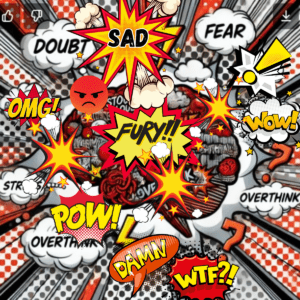
Ever notice how one uncomfortable thought can take over your whole day, while ten good moments barely register?
That is not a personal failing.
That is your brain doing what it evolved to do.
Long before modern life, the human brain learned to scan for danger first. Paying attention to threats kept our ancestors alive. Calm and contentment were secondary. That wiring never went away, even though our world changed.
At 38 Hertz, we do not try to overpower the brain or force positive thinking. We work with how the brain actually functions. Happiness shows up through small signals of safety, repetition, and ease. Not through hype. Not through effort. Just through gentle shifts that the nervous system understands.
This article explains why negativity feels so loud, why happiness can feel elusive, and how small, practical cues can slowly retrain the brain toward calm and well being.
Why Modern Life Makes This Worse
-
24/7 news cycles
-
Social media comparison
-
Productivity pressure
-
Constant alerts → constant threat signals
As a result, our brains became wired to prioritize negative information over positive experiences. The amygdala, the brain’s fear center, processes negative emotions more intensely and stores them in long-term memory. This is why one criticism can linger longer than ten compliments.
The media capitalizes on bad news because our brains react more strongly to potential threats. Social conditioning plays a role too—many people grow up receiving more criticism than praise, shaping how they interpret the world.
Affiliate Disclosure: This page may contain affiliate links. If you make a purchase through these links, I may earn a small commission at no extra cost to you.
🧠 Happiness and the Primitive Brain (In a Snapshot)
🎯 Big idea: Your brain scans for danger by default—but you can train it toward calm and joy
⏱ Time needed: 2 minutes to start, 10 minutes to practice
💸 Cost level: Free to low-cost tools
🏠 Where: Anywhere—desk, car, kitchen, before bed
✅ Best for: Overthinkers, worriers, sensitive people, anyone who wants happier habits without hype
🧩 Why it works: Small physical and mental cues calm the nervous system faster than “positive thinking”
⭐ Featured Find: A One-Second Mood Interrupt
Our minds are problem-solving machines, constantly scanning for issues to fix. That makes negativity feel more urgent and “real” than happiness. Fear and anxiety trigger the fight-or-flight response, which is why they feel immediate.
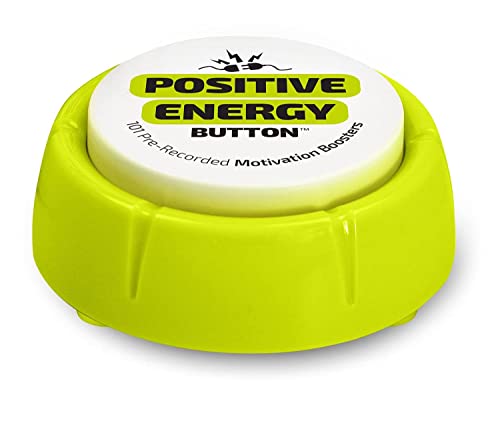
Sometimes the fastest way to interrupt that loop isn’t another thought—it’s a physical cue.
This small, playful button works as a pattern interrupt for the primitive brain. Pressing it replaces the threat-scan with something light and unexpected, helping your nervous system reset.
How You Can Counteract Negative Thinking for More Happiness
Negativity is natural. But it doesn’t have to run the show.
To rewire your brain for positivity, you don’t need big mindset overhauls—you need small, repeated cues. When a negative thought arises, pause and question it. Then gently replace it with something more constructive. Over time, your brain forms new connections, making positivity more automatic.
Try one or two of these—consistency matters more than quantity:
-
Practice Gratitude Daily
Write down three things that went right, even on hard days. -
Reframe Negative Thoughts
Ask, “Is this actually true?” Then offer yourself a kinder alternative. -
Limit Exposure to Negativity
Reduce time spent on distressing news, toxic social media, or draining conversations. -
Engage in Positive Self-Talk
Speak to yourself the way you would to someone you care about. -
Move Your Body
Even a short walk releases mood-boosting brain chemicals. -
Focus on Solutions, Not Problems
Action calms the nervous system and builds confidence. -
Surround Yourself with Positivity
Uplifting people and content reinforce healthier thought patterns. -
Practice Mindfulness and Deep Breathing
Staying present breaks cycles of overthinking. -
Engage in Activities That Bring You Joy
Creativity and play signal safety to the brain. -
Laugh More
Laughter lowers stress and interrupts rumination.
Helpful tools: Some people find that a simple gratitude journal, affirmation cards, or a cheerful desk item makes these habits easier to remember and repeat.
🌱 Want This to Feel Easier?
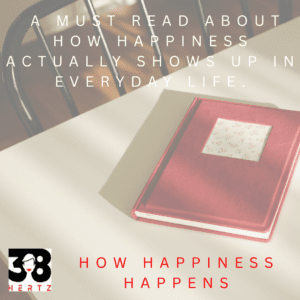
I created a gentle guide that shows how happiness actually shows up in everyday life — without forcing positivity or pretending everything’s fine. How Happiness Happens is a short, calm ebook you open when you need relief — not a project.
It’s for people who want relief, not a personality overhaul.
Price
$[12]
One-time purchase. Instant download.
What the Experts Say About Negative Thinking
Modern psychology agrees on one core truth: your brain’s negativity bias isn’t a flaw; it’s a survival feature that never got updated.
🧠 The Big Takeaway
- Negativity isn’t who you are.
- It’s how your brain learned to protect you.
And because the brain learns through repetition, small repeated signals of safety (not forced positivity) are what gradually rewire it.
🧩 Writing Down Negative Thoughts Helps You See the Pattern
Mental health writer Anne Borges (SELF) explains that even writing down a single negative thought can reveal recurring mental patterns. Once those patterns are visible, they lose some of their power.
You’re no longer stuck inside the thought, you’re observing it.
That shift alone creates space for a calmer response instead of an automatic one.
(👉 Source: Self)
🧩 Most Negative Thoughts Aren’t Facts
According to VeryWellMind, negative thinking often shows up as predictable distortions — catastrophizing, mind-reading, or assuming the worst without evidence.
When you pause and gently question a thought instead of believing it on reflex, the nervous system settles. You move from threat mode into clarity.
(👉 Source: Very Well Mind)
🧩 Why Negativity Feels So Convincing
In Forbes, contributor Carmine Gallo references technologist Mo Gawdat’s explanation of what he calls a primitive mental bug.
Our brains evolved to scan for danger — not happiness. Survival required vigilance, not optimism. The brain doesn’t care if we feel fulfilled or joyful; its only job is to keep us alive.
That’s why fear feels urgent, criticism sticks, and worry shows up uninvited — even when life is objectively safe.
(👉 Source: Forbes)
🔁 How Repetition Rewires the Brain (Hebbian Theory)
Neuroscience offers a simple rule that explains why habits, both helpful and harmful, become automatic.
Neurons that fire together, wire together.
This idea, known as Hebbian Theory, explains that the brain strengthens whatever patterns it repeats most often. Thoughts, emotions, and behaviors that occur together repeatedly become easier to trigger over time.
-
Positive daily planner with prompts
🧠 The Science, Simplified
- The brain does not learn through insight.
- It learns through repetition.
🧩 How This Shows Up in Everyday Life
Learning to ride a bike
Repeated practice strengthens the neural connections for balance and coordination until riding feels natural.
Typing without looking
At first, every keystroke requires effort. With repetition, the brain wires the movement into muscle memory.
Repeating negative self talk
Each time the same critical thought appears, the brain reinforces that pathway, making it faster and louder next time.
None of this is about willpower.
It is simply how the brain learns.
🧩 What This Means for Happiness
Because the brain strengthens what it repeats, happiness does not come from one big mindset shift.
It is built through small, repeated signals of safety, kindness, and reassurance.
When you consistently introduce gentler thoughts or calming actions, new neural pathways begin to form. Over time, the old negative loops weaken.
🛠️ How to Use Hebbian Theory to Shift Negative Thinking
You do not need to eliminate negative thoughts.
You only need to pair them with something new, and repeat that pairing.
Replace, do not erase
When a negative thought appears, follow it with a neutral or kinder one.
Repeat tiny positives
Gratitude, affirmations, or calming rituals work because repetition wires them in.
Visualize safe outcomes
Imagining things going well activates the same neural networks as real success.
Practice compassionate self talk
Speaking to yourself kindly builds emotional resilience over time.
Surround yourself with positive cues
Your environment matters. Visual reminders, uplifting content, and supportive people reinforce healthier pathways.
🧠 The Big Takeaway
- You do not need to think harder.
- You need to repeat kinder patterns.
With consistency, the brain adapts.
What once felt effortful begins to feel natural, not because you forced it, but because your brain learned a new default.
(👉 Source: Wikipedia)
Featured Video: The Happiness Trap
On the Other Hand
“You don’t need to feel positive. You need to feel safe.”
Toxic positivity is the excessive and unrealistic focus on positive thinking, to the point where it dismisses, invalidates, or suppresses real emotions, especially negative ones. It implies that people should always stay happy, no matter the circumstances, which can be harmful.
Signs of Toxic Positivity:
- Dismissing Difficult Emotions – Saying “Just stay positive” when someone is struggling instead of acknowledging their feelings.
- Forcing Positivity – Expecting people to always be cheerful and optimistic, even in genuinely tough situations.
- Shaming Negative Feelings – Making people feel guilty for expressing sadness, anger, or frustration.
- Ignoring Real Problems – Avoiding difficult conversations by only focusing on “good vibes.”
- Minimizing Struggles – Saying “It could be worse” instead of offering support and understanding.
Why It’s Harmful:
- Suppressing emotions can lead to increased stress, anxiety, and even depression.
- Invalidating experiences makes people feel unheard and unsupported.
- Creates unrealistic expectations that happiness is the only acceptable emotion.
A Healthier Alternative:
Instead of toxic positivity, practice emotional validation and balanced optimism:
✔ Acknowledge that struggles are real (“It’s okay to feel this way”).
✔ Encourage hope and solutions (“This is hard, but you’re not alone”).
✔ Allow space for both positive and negative emotions to coexist.
True emotional well-being comes from embracing the full range of human emotions, not forcing constant happiness.
(👉 Source: VeryWellMind)
💛 Where Happiness Actually Comes From
Your brain is not broken.
It is protective.
And it learns through repetition.
That means happiness does not come from fixing every thought or eliminating negativity. It comes from repeatedly pairing daily life with small signals of safety, kindness, and reassurance.
Tiny actions matter. A calmer breath. A gentler thought. A physical cue that interrupts the stress loop. Over time, these moments begin to wire together. What once felt effortful starts to feel natural.
You do not need to change who you are.
You only need to change what your brain practices.
If you want support doing this in a simple, grounded way, here are a few gentle next steps. Choose what feels right, or choose nothing at all.
-
📘 Simply and Beautifully With Little Effort, a short guide to how happiness shows up in everyday life
-
🧠 Explore the 38 Hertz Happiness Hacks for practical ideas you can use today
-
🤝 Join the 38 Hertz Community. We are in the happiness business
Start small. Your brain will take it from there.
Related Articles, Hacks, Links, and Stuff
-
- Do Yourself a Favor and Write Down Your Negative Thoughts.”
- Changing Your Thoughts With EFT/Tapping
- VeryWellMind
- The VeryWellMind FREE test
- Fix The Primitive Mental Bug That Threatens Your Happiness
- The Hebbian Theory
- VeryWellMind also explores “toxic positivity.
- 38 Hz Hacks – Simple Things to Do Now
- 38 Hz Hacks – Happiness in Your Hands
- Join the 38 Hertz Community, we’re in the happiness business!
FOLLOW US ON SOCIAL MEDIA


Posts